

Description
Sacred and Healing Basil
Sacred Herb with Aromatic, Healing Leaves
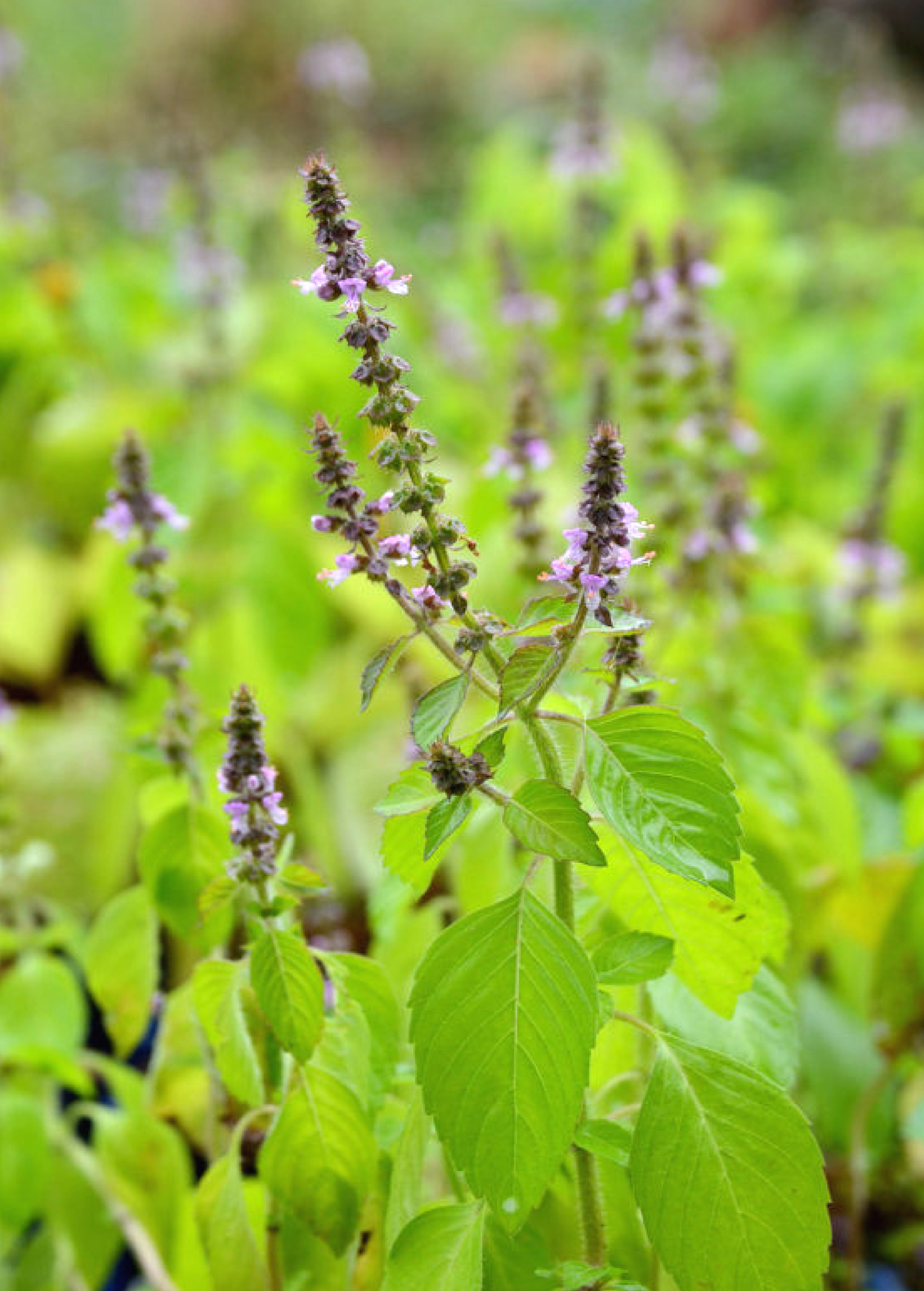
Rama Tulsi is one of the most revered herbs in Ayurvedic medicine and Indian culture. Known as the "Queen of Herbs," Tulsi is considered a sacred plant and is traditionally grown near homes and temples in India. Tulsi 'Rama' has bright green, slightly serrated leaves with a distinctively sweet, aromatic fragrance. The leaves are rich in essential oils and antioxidants, and Tulsi is traditionally valued for stress relief, immune support, respiratory wellness, and overall health. It thrives in warm climates and is easy to grow, making it a popular choice for herb gardens, containers, and medicinal gardens.
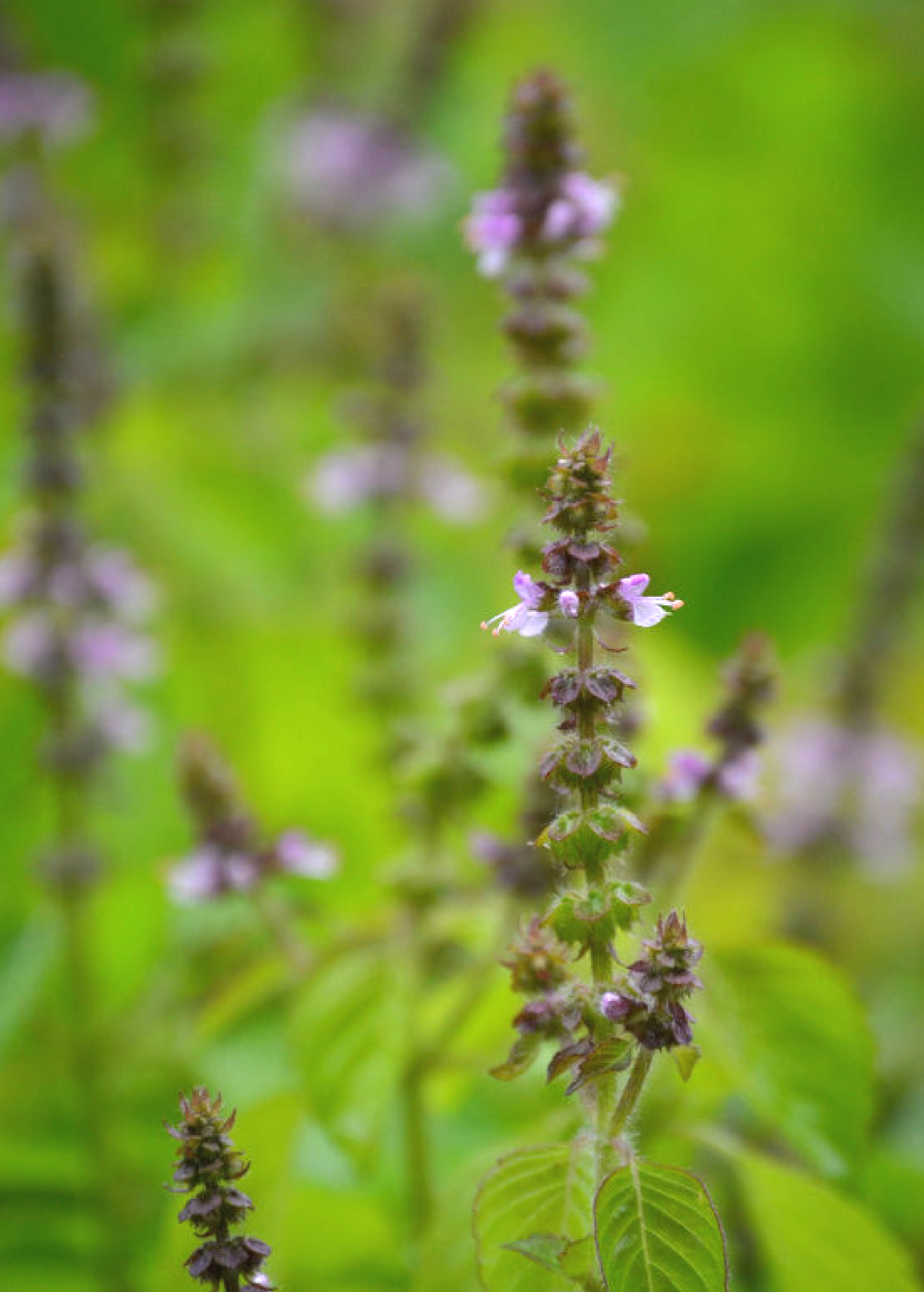
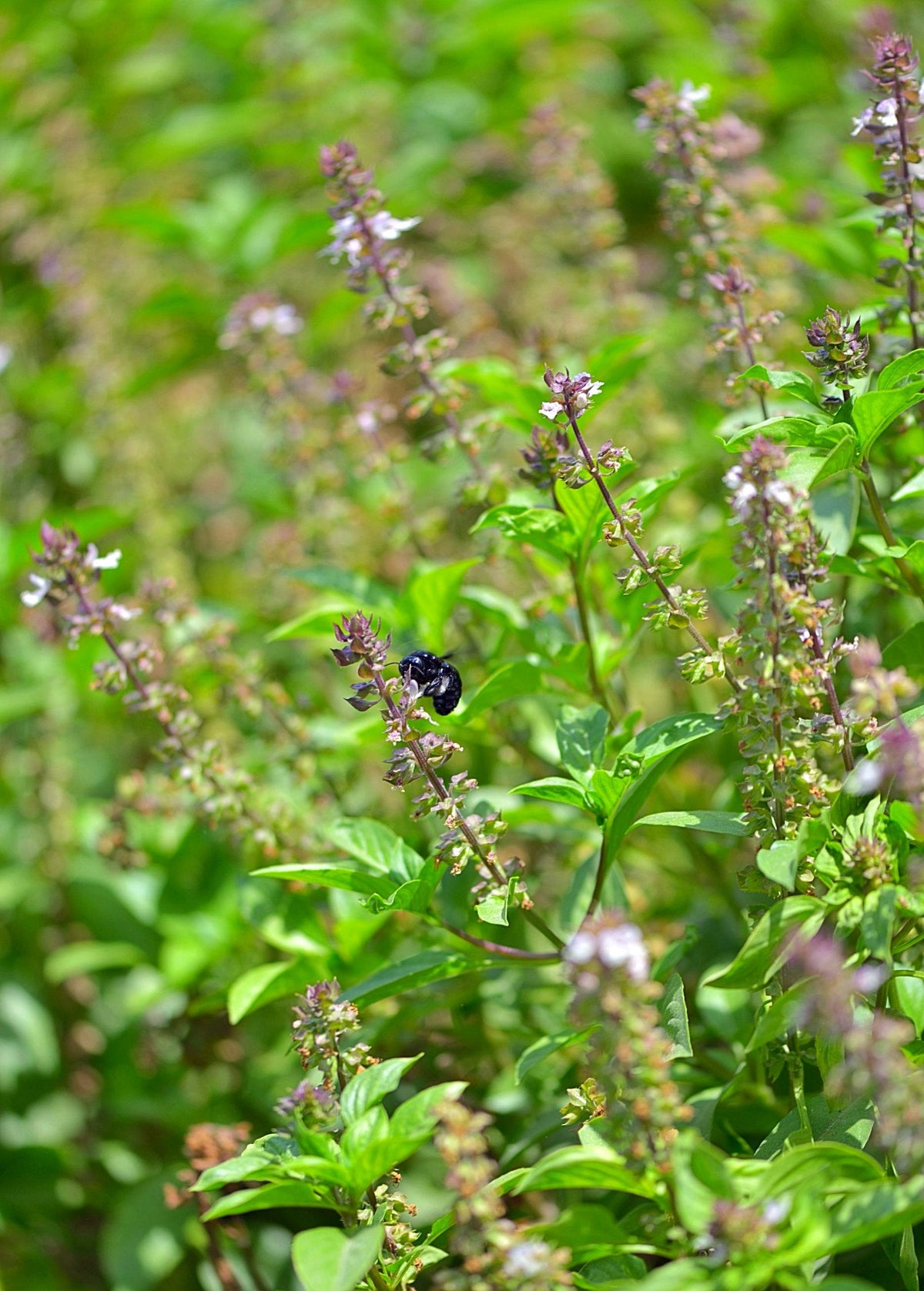
Tulsi 'Rama' has a cooling, mellow flavor with scents of peppermint, cloves, licorice, and lemon. The plant produces small purple or white flowers arranged in spikes, adding beauty to the garden while attracting pollinators. A fast-growing, perennial herb in tropical climates, Rama Tulsi is often grown as an annual in cooler regions and typically reaches 2–4 feet tall and wide, forming a bushy, aromatic plant.
Cultural & Culinary Significance
Tulsi 'Rama' is highly valued for its medicinal benefits and has long been used in Ayurvedic medicine to promote relaxation, support the immune system, and improve respiratory function. The leaves are often brewed into herbal teas, prepared as tinctures, or taken as supplements. Traditionally, Tulsi is used to relieve stress, reduce inflammation, and support overall wellness. It is also used in cooking, particularly in soups, teas, and curries, though its primary value is as a medicinal herb.
Holy Basil also works wonderfully as a companion plant in the garden. Its strong aromatic oils, including eugenol, oleanolic acid, ursolic acid, rosmarinic acid, and linalool, help make it a natural pest repellent. These constituents contribute to the plant's distinctive fragrance and are also associated with its traditional medicinal effects.
Why Grow Rama Tulsi?
- Add a sacred and deeply revered herb from Ayurvedic and Indian traditions to your garden.
- Enjoy bright green, aromatic leaves with a cooling, mellow flavor and notes of peppermint, cloves, licorice, and lemon.
- Brew the leaves into herbal teas or use them in tinctures, supplements, soups, and curries.
- Grow a traditional wellness herb valued for relaxation, immune support, respiratory wellness, and overall health.
- Attract pollinators with beautiful spikes of small purple or white flowers while benefiting from the plant's naturally strong aromatic oils.