
Description
Aromatic Holy Basil with Shrubby Growth
Vana Tulsi, or Ocimum gratissimum, is one type of Holy Basil. Holy Basil plants are the key to holistic life, according to Ayurvedic medicine. While plants as medicine are nothing new to traditional medicinal practices, some cultivars like Ocimum gratissimum give skeptics a run for their money with its proven antimicrobial effects. You could say Ocimum gratissimum is easy to grow, given its history of cultivation in South Asia and Africa for thousands of years.
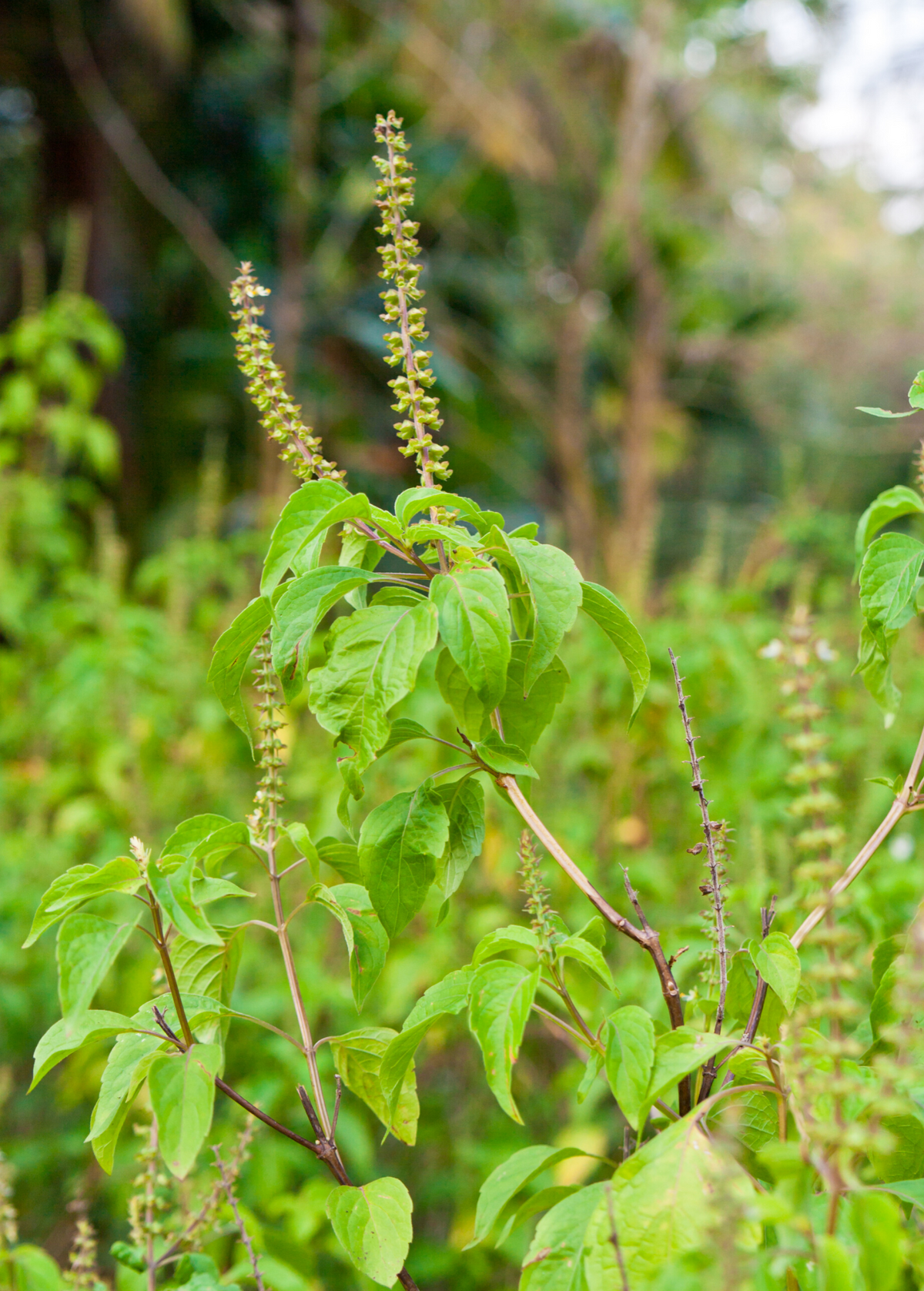
Ocimum gratissimum has a shrubby growing habit like most basils, reaching 2–4 ft. tall at maturity. Vana Tulsi blooms in the late summer, with ripples of tiny white flowers. The roster of strong aromatic oils of Vana Tulsi include Eugenol, Oleanolic Acid, Ursolic Acid, Rosmarinic Acid, and Linalool. These help make it a natural pest repellent and contribute to the sensory healing powers of Tulsi. Sometimes, smelling, feeling, and tasting is believing. Grow Vana Tulsi to complete your collection of Holy Basil.
Cultural & Culinary Significance
Vana Tulsi has a long history of cultivation in South Asia and Africa and is valued as a type of Holy Basil within Ayurvedic medicine and traditional medicinal practices. Its strong aromatic oils give the plant its distinctive fragrance while contributing to its traditional uses and natural pest-repellent qualities.
The late-summer blooms add another layer of interest to this shrubby herb, with ripples of tiny white flowers appearing above the aromatic foliage. Vana Tulsi makes a meaningful addition to medicinal, fragrant, and herb gardens, especially for growers building a collection of different Holy Basil varieties.
Why Grow Vana Tulsi?
- Add a distinctive type of Holy Basil to your medicinal and herb garden.
- Enjoy a shrubby, aromatic basil that reaches 2–4 ft. tall at maturity.
- Grow a plant with a long history of cultivation in South Asia and Africa.
- Enjoy late-summer ripples of tiny white flowers that add beauty to the garden.
- Benefit from naturally aromatic oils including Eugenol, Oleanolic Acid, Ursolic Acid, Rosmarinic Acid, and Linalool, which contribute to its natural pest-repellent qualities.